
Is it Spring yet?
Updated: Feb 20
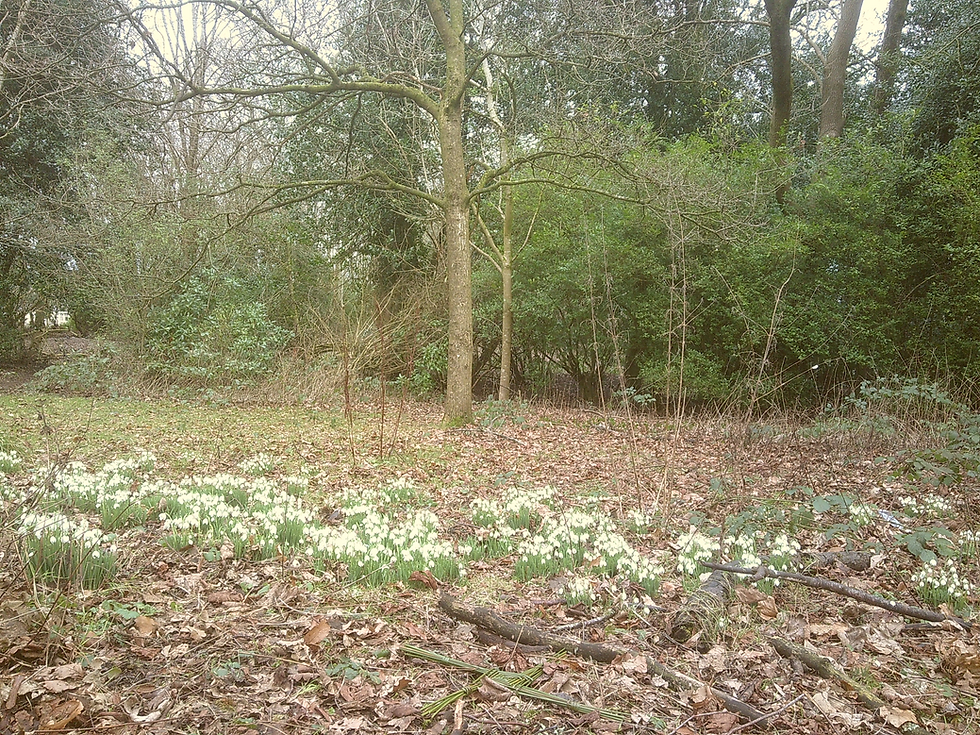
It's a question I love to debate every season, not least because I love a topic that provokes a debate. Perhaps Spring is the season that most begs the question. Sure you can answer it the boring way. According to the Met Office it depends on whether you are referring to astronomical or meteorological spring. If you measure it by the movements of the planets (astronomy) then it starts at the Spring Equinox which in 2026 is at 14:46 on the 20th March. If you're measuring by the average temperatures (meteorology) then the year is divided neatly into 4 seasons (hello Vivaldi!) and Spring is defined as March, April and May. However as the folks at the Greenwich Observatory point out, there is a third way, and that's phenologically, essentially observing the signs of Spring. It might have "logic" in its name, and it's the way I love to think about Spring, but I don't think there's anything very logical about it at all! One day the sun is shining, the crocuses are blooming, it's definitely Spring. The next, torrential rain and a biting wind, winter is undoubtedly back. I still find it the most alluring way, perhaps because of all the false dawns, but also because I love watching for the signs. First the snowdrops, one or two and then blankets of them; crocuses bringing some colour to the party. Best of all the daffodils, the early patch in our local park that gives me so much hope when it really is still deepest winter. The narcissi beating their big brothers to the show. The £1 supermarket bunches to bring home. I've not even mentioned the Celtic calendar which insists St Brigid's Day at the start of February heralds Springtime, but I'm not having any of it, not this year when we've only seen the sun twice, however amazing those two days were!
This rant was triggered by a non-nature related podcast I listened to this week, the full title was "Is it Spring yet? Ways to get yourself out of a funk, seasonal or otherwise." It was filled with lots of good advice to get through those February blues and did indeed include ideas such as getting out for a walk, but also looking for signs of Spring. One I'd have added was "celebrate festivals" and there have been an abundance of them recently. Not least this week when the new moon meant that Shrove Tuesday, Ramadan and Lunar New Year all coincided! I fell down an internet hole regarding how these festivals relate to the moon and discovered that 2030 will include TWO Ramadans! Apparently this phenomenon happens roughly every 33 years as the lunar calendar completes its cycle against the solar calendar. Sadly still only one pancake day though.
Whilst these last, everlasting, days of Winter endure I've been indulging in some indoor nature connection content to soothe my soul. I'm still making my daily(ish) park pilgrimages but they're still mainly in the dark, and so, despite the many books I'm reading that are encouraging me to notice the new shoots of "weeds" pushing up at the edges of pavements in the hedgerows, I'm still struggling to identify them as anything other than green. It has been delightful to start the year with books that unfold nature throughout the year. From The Blackbird's Song, nature connection guru Miles Richardson's book that documents his initial re-connection to nature, my ever present Almanac by Lia Leendertz, this year inspired by trees, as 2026 is likely to be a mast year, that's a year of extreme abundance in the forest; The Edible City - A Year of Wild Food by John Rensten, including recipes to make from those weeds, I'm as yet unable to identify and Understorey - A Year Among Weeds by Anna Chapman Parker, where the author studies the every day and the ever present plants known as weeds through both words and simple line drawings. If you don't fancy doing battle with several books at once, they do rather take over your life and your living room, then may I suggest the Encounter app for keeping up to date with the latest nature sightings. Designed in collaboration with the aforementioned Miles Richardson it offers seasonal prompts, including ones local to you, so you won't be looking for green shoots that aren't necessarily there. You can also use it as a Three Good Things in Nature journal, noting down what you see every day.
I attended a webinar delivered by The Forest School at the Yale School of the Environment alongside Orion Magazine whose focus is on nature, culture and place. Authors Ross Gay and Aimee Nezhukumatathil were in conversation on the subject of the love of nature and the nature of love, looking at human relationships with the natural world and as you'd expect from the author of The Book of Delights, it was indeed delightful and can be watched here. It also taught me about the concept of volunteer plants! These are seedlings that grow on their own without being intentionally planted and wiki suggests that the action of plants growing in this manner can be called volunteering. If you're a veggie gardener, you might have come across this, if there's an escapee potato at the end of a season whose sprouts suddenly appear the following year, and also tomatoes, where a fruit has fallen onto the soil, the seeds germinate and grow into a plant next season. Depending on the sort of seed you planted in the first place, the fruits of these volunteer plants might not be exactly what you are expecting, cross pollination can lead to a hybrid that might keep the characteristics you bought the seed for in the first place - small, sweet, red, for example, but not all results are good. It can however lead to a magical mystery tour in your own garden, so why not let a couple of volunteers grow in your garden.
Talking of volunteering - as well as volunteer plants, there are opportunities for human volunteers. In particular the Clyde Climate Forest are looking for volunteer tree wardens to keep an eye out for the new trees that they're planting in 6 areas in Lanarkshire - Rutherglen, Blantyre, Burnbank, Bellshill, North Motherwell, Central Wishaw! (Volunteers to take part in tree planting events are also needed in some places!) If you live locally, then it's an ideal opportunity, giving a little bit of motivation to get outside, even in winter, but also a way to fine tune your nature noticing skills, keeping an eye out for anything that might be amiss with the young trees and offering the chance to learn new tree related skills. If trees are your thing - or you think they might be - get in touch with Laura at TCV laura.salvage@tcv.org.uk
Finally, I attended another nature connection adjacent webinar this week and must draw your attention to the new newsletter This Haiku Life from artist and poet Lisa Germany; I really recommend signing up. As long time readers of this blog know, I love the idea of writing haiku but am also a little terrified. I've experimented with haiku generators and even begged one of my favourite haiku-ists (is that a word?) to develop a pack of kigo cards to make haiku writing easier. A kigo is a seasonal word and every haiku should contain one! However Lisa took away a lot of my fear, and neatly explained what to look for in nature, how each line of the haiku should be its own phrase, and how reorganising those lines can turn a fairly ordinary sentence into a haiku! She has produced a wee zine which breaks haiku writing down into easy steps, and is free when you sign up to her newsletter. Also, and I am VERY excited about this, I learnt that going for a walk with the intention of writing a haiku is called a ginko! Let's get Lanarkshire ginko-ing: go for a walk, observe nature using each of your senses and be inspired to write a haiku!!!
.


Comments